Laboratoire partenaire international
université de Caen Normandie – université de Turku
Living Semantics: The dynamic meaning construction of what counts as life
The Living Semantics project explores the meaning construction of animacy from a postanthropocentric perspective with scientific and artistic methods. Animacy is the cognitive and linguistic representation of ‘being a living being’. In linguistic literature, animacy is treated as a scalar meaning category where humans occupy the hierarchically highest position. However, discourse analytic studies and psycholinguistic research have recently addressed the problematics of situational and text-genre-related variation in animacy.
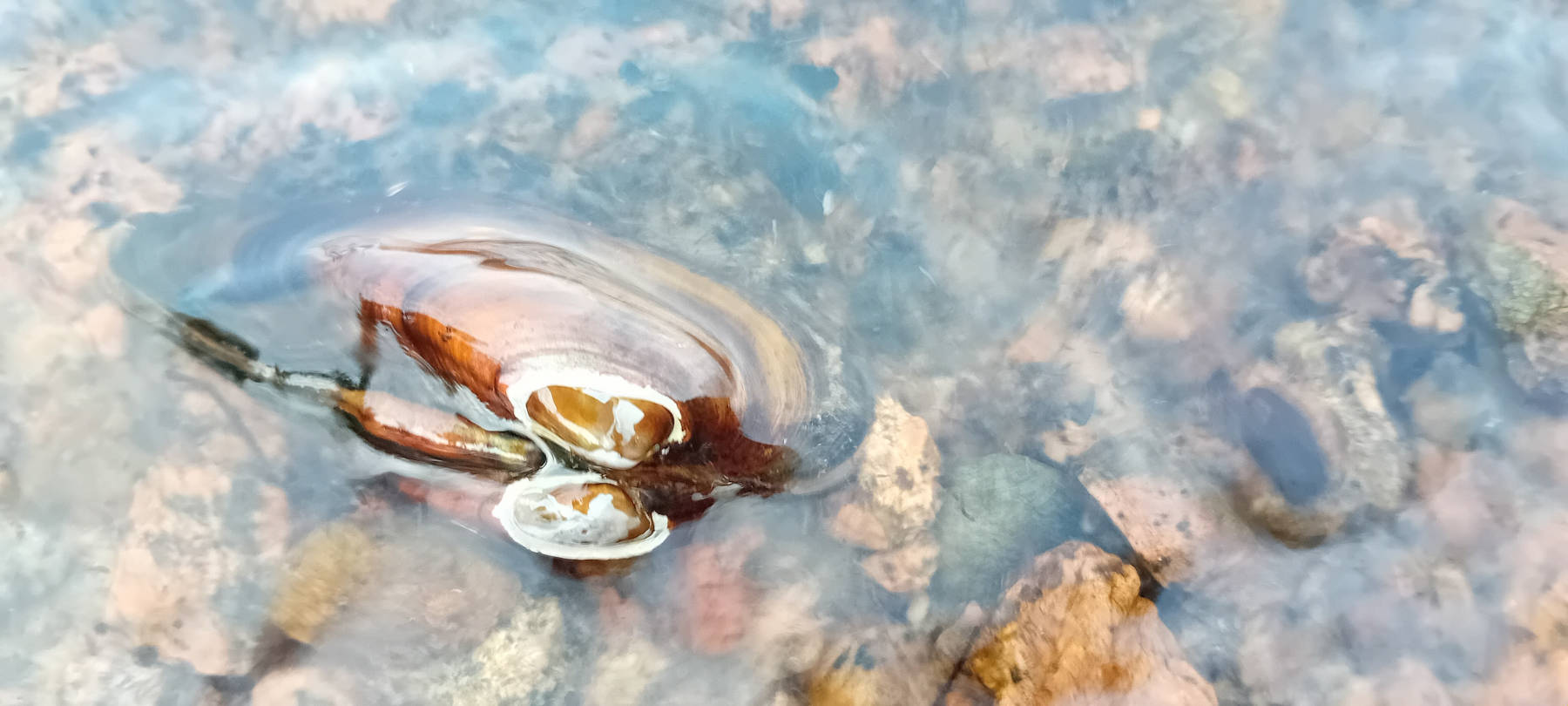
This project aims to create an alternative, less hierarchical and less human-centered model for describing grammatical and lexical animacy. For this, the project merges semantic analysis, including visual modelling, with artistic visual and tactile expression. The project is in search for a material and theoretical design that accounts for the variation in the treatment of animacy without resorting to explanations entailing temporary promotion or demotion on a linear scale. The focus is on the conceptualisation of entities that challenge the fixed dichotomies of animate/inanimate, human/non-human, individual/mass: microbes, embryo, plants, animals, boulderstones.
The project approaches animacy as an inherently interactional and embodied cognitive and linguistic construct. Animacy cues stem from affordances that result from the interaction between the possibilities of perception/action that the environment offers to the observer and the specific bodily makeup and needs of the observer. Three types of affordances are addressed: potential for interaction, individuality, and sentience. The multidisciplinary methods of visual arts, namely drawing and ceramics, yield tools for representing the intricate dynamics of animacy, whereas the scientific process nourishes the artistic work by providing material for exploring the shape of ‘what counts as life’ in language and cognition. The project is anchored on a bilateral collaboration between specialists in Finnish and French, in Caen and Turku.
The scientific programme is accompanied by an educational component, Parlons plante(s), organised by the Department of Nordic Studies at the University of Caen Normandy, in collaboration with the Normandy Regional Directorate for Cultural Affairs (DRAC), the University Cultural Service (SUAC) and the Alexis de Tocqueville public library. The educational programme offers students the opportunity to explore the different ways in which an artistic and ecolinguistic approach can be used as resources in language learning.
Comment parle-t-on de ce qui vit ? Comment le perçoit-on ? Est-ce grâce au mouvement, à la sentience, à l’interaction… ?
Le laboratoire partenaire international La sémantique du vivant explore ce qui compte comme vie dans la langue. Le projet se concentre sur des questionnements concernant la catégorie linguistique « animé » dans la construction du sens et le discours. L’approche adoptée met en avant les fondements interactionnels et corporels du traitement linguistique des entités de l’environnement. Le projet relève d’une collaboration entre l’équipe CRISCO de l’Université de Caen-Normandie et l’Université de Turku, Finlande.
Au projet scientifique s’associe le volet pédagogique Parlons plante(s), en partenariat avec la Direction régionale des affaires culturelles de Normandie (DRAC) et le Service universitaire de l’action culturelle (SUAC) de l’université de Caen Normandie. Le programme pédagogique invite les étudiants du département d’études nordiques de UNICAEN à explorer les différentes manières dont une démarche artistique et une approche écolinguistique peuvent servir de ressources dans l’apprentissage d’une langue.